


How Fiber Fuels Your Mitochondria... Feel More Energized
When most people think about fiber, they think about regularity >>> But fiber does something far more powerful >>> It feeds your gut bacteria — and in turn, your gut bacteria feed your mitochondria.
And that changes everything.
Fiber Doesn’t Directly Fuel You
The fiber you eat isn’t digested like protein, fat, or carbohydrates. Instead, it travels to your colon where your gut microbes ferment it and produce short-chain fatty acids — especially butyrate. Butyrate acts like rocket fuel for the cells lining your gut.
Those cells are packed with mitochondria — your cellular energy engines — and butyrate helps them produce energy efficiently while strengthening the gut barrier.
And that barrier? It’s what keeps toxins, bacteria, and inflammatory compounds out of your bloodstream.

What Happens When Fiber Is Too Low?
Sadly, most adults are walking around fiber deficient. The average intake is about 15 grams per day.
Women should aim for at least 25 grams, and men for 38 grams daily.
When fiber intake is low:
Butyrate production drops
Gut mitochondria lose fuel
The gut barrier weakens
Inflammatory compounds slip into circulation
Over time, this can contribute to:
Fatigue
Systemic inflammation
Blood sugar dysregulation
Increased cardio metabolic risk
Chronic disease progression
This is why I care so much about fiber in my clients’ plans. It’s not just about digestion. It’s about metabolic resilience.
How to Feed Your Mitochondria (Through Your Gut)
Supporting mitochondrial health doesn’t require complicated biohacks. It requires consistency.
Prioritize Diverse Plant Fiber
Different bacteria thrive on different types of fiber, which is why variety matters so much. When we rotate and diversify plant foods, we support a more resilient and balanced microbiome — and ultimately stronger butyrate production.
Beans and lentils are some of the most powerful fiber sources available. They provide both soluble and insoluble fiber, along with resistant starch that feeds butyrate-producing bacteria. If someone tolerates them well, they can be incredibly supportive for metabolic and gut health.
Leafy greens deserve daily attention. Spinach, kale, arugula, romaine — these aren’t just “low-calorie fillers.” They provide fermentable fibers along with magnesium, folate, and phytonutrients that support mitochondrial and immune function.
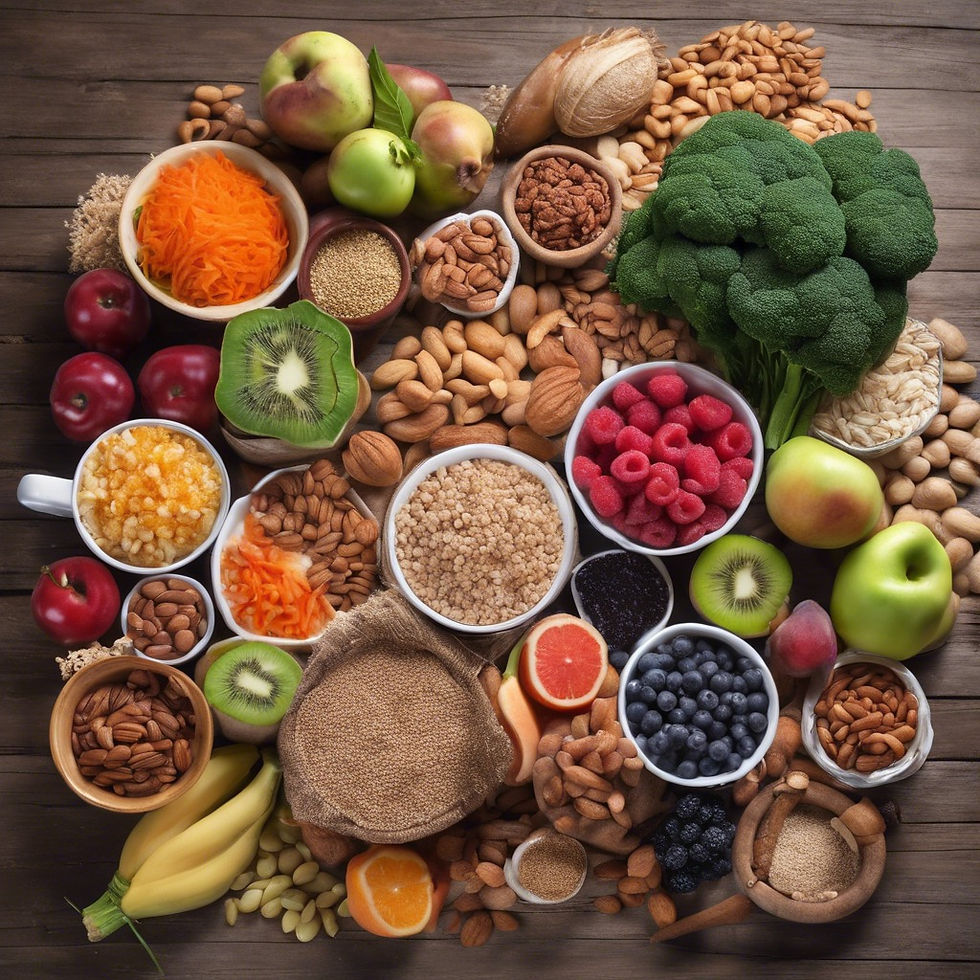
Nuts and seeds are another simple way to increase fiber intake. Almonds, walnuts, chia seeds, flaxseeds, and pumpkin seeds can easily be added to salads, smoothies, yogurt, or used as snacks. They also provide healthy fats that support cellular membranes. That said, this category can add up quickly. For some people — especially those with sensitive digestion — going slowly and paying attention to tolerance is important.
Root vegetables are another excellent addition. Sweet potatoes, carrots, parsnips, beets, and turnips provide a mix of soluble and insoluble fiber. Their exact composition varies, but they’re consistently supportive for gut bacteria when eaten in balanced portions. They also offer valuable antioxidants and minerals that support overall metabolic function.
Vegetables in general should form a significant portion of a nutrient-dense plate. I often encourage clients to aim for half their plate to be non-starchy vegetables at meals. Think leafy greens, cruciferous vegetables like broccoli and Brussels sprouts, peppers, zucchini, cucumbers, and tomatoes. These foods provide fiber, micronutrients, and plant compounds that work synergistically with the microbiome.
Fruit can also play a supportive role. Moderate amounts of whole fruit contribute fiber and essential vitamins. Berries are especially powerful due to their polyphenols and lower sugar content. They don’t just feed beneficial bacteria — they also help reduce oxidative stress, which protects mitochondrial function.
Diversity truly matters. More diversity in plants leads to more diversity in microbes — and that leads to stronger butyrate production, a more resilient gut barrier, and better long-term metabolic health.
Increase Gradually
If someone jumps from 12g to 35g overnight, bloating will happen. Increase slowly and hydrate well. Your microbiome needs time to adapt. (I’m always talking about gradually increasing fiber in clients with low beneficial bacteria — this is exactly why.)
Add Resistant Starch
Resistant starch is especially powerful for butyrate production. Examples:
Cooked and cooled potatoes
Cooked and cooled rice
Oats
This is one of my favorite metabolic tools — especially in clients working on insulin sensitivity.
Use Supplementation Strategically
If food intake is consistently low, a high-quality fiber supplement can help bridge the gap. But food first, always. (And this is where personalized plans matter — not everyone tolerates the same fibers.)
Pair Fiber with Protein & Polyphenols
Mitochondria don’t just need fuel — they need protection. Pair fiber with:
Adequate protein (amino acids support repair)
Colorful plants (polyphenols reduce oxidative stress)
This is why a balanced plate matters more than chasing macros alone.
The Big Picture
Your mitochondria are responsible for:
Energy production
Immune signaling
Hormone regulation
Cellular repair
Inflammation control
And what feeds them… starts in your gut.
Fiber isn’t just about digestion.
It’s about feeding the bacteria that feed your mitochondria.
It’s about strengthening your barrier.
It’s about protecting long-term health.
So the next time you add nuts to a salad or berries to your yogurt, know this:
💫 You’re not just eating for today
💫 You’re feeding your cellular engines
💫 And that matters.


Comments