


Are You Eating Too Little for the Life You're Living?
Most people assume that low energy comes from not sleeping enough, doing too much, or simply being stressed. And while all of those things matter, there is another possibility that often gets overlooked, one I see in my practice more than almost anything else:
Sometimes the body just is not getting enough fuel to do everything we are asking of it.
This is not a new concept in the world of elite athletics. But what I want you to understand is that you do not have to be training for a marathon for this to apply to you.

What Is Low Energy Availability?
Low Energy Availability, or LEA, is what happens when the energy coming in through food is not enough to cover both your exercise demands and the basic physiological work your body does behind the scenes.
Think hormone production. Thyroid function. Immune defense. Muscle repair. Recovery.
The formal term you may have heard is RED-S, or Relative Energy Deficiency in Sport. Many people hear that and assume it only applies to competitive runners or elite athletes. But the physiology does not care whether you have a race bib or not. It just responds to what it is given.
The body is incredibly smart. If it does not believe enough energy is coming in, it starts making decisions.
Muscle repair gets reduced.
Hormone production gets downregulated.
Recovery suffers.
The body shifts from thriving to conserving.
Who Is This Actually Affecting?
In my practice, I see something very similar to LEA in women who have never thought of themselves as athletes at all. Women who skip breakfast and live on coffee until noon. Women who walk 10,000 steps a day and take fitness classes several times a week. Women who are intentionally restricting calories to lose weight. Women who are on GLP-1 medications and simply are not hungry anymore.
Physiologically, they are creating the same problem an underfueled athlete creates. The body does not have enough incoming energy to support what is being asked of it. And so it compensates in ways that often feel like personal failure, but are not.
Common signs of Low Energy Availability:
Persistent fatigue
Poor workout recovery
Difficulty building muscle
Hair loss
Getting sick more often
Always feeling cold
Poor or disrupted sleep
Hormonal irregularities
Plateaued weight loss
Intensified cravings
Loss of menstrual cycle
Reduced performance despite training harder
Why Women Need to Pay Particular Attention
Researcher and women's physiology expert Stacy Sims has spent years emphasizing this: women are not small men, and we are particularly sensitive to under-fueling. When energy availability drops, the female body tends to prioritize survival over reproduction and hormonal balance, which is why things like thyroid function, estrogen production, and cycle regularity are often the first things to suffer.
This matters deeply in the context of menopause and perimenopause, where hormones are already declining and the body is navigating a significant hormonal shift. Add under-fueling on top of that, and you are putting real stress on bone density, lean muscle mass, and metabolic function, all things we should be working hard to protect during this window of life.
The frustrating paradox is that many women in this season are also trying to manage their weight.
They cut calories.
They move more.
They push harder.
And then they wonder why the scale is not moving, why they feel exhausted, and why building muscle feels impossible.
Sometimes, not always but sometimes, eating less is exactly what is stalling progress.
A Note for Anyone on GLP-1 Medications
I want to be clear: I think GLP-1 medications can be genuinely helpful tools for the right person.
That is not what this section is about.
What I do want to name is a real challenge I am seeing, one that does not get enough attention.
GLP-1 medications are very effective at reducing appetite. For many people, that appetite suppression is significant, and it happens quickly. The problem is that appetite decreases faster than your body's actual nutrient needs do.
Research is starting to confirm what I see in practice. In people taking GLP-1 medications, vitamin D deficiency was observed in 7.5% of participants at six months and climbed to 13.6% by twelve months, with average intake sitting at just 20% of the recommended amount. Iron and calcium intake were below recommended levels in over 60% of participants. Ferritin levels were 26 to 30% lower compared to people on other diabetes medications. And deficiencies in both B1 and B12 increased the longer people stayed on the medication. The take home here is at least make sure you are on a good mulitivitamin to get in key nutrients for foundational support (this is one multi I recommend).
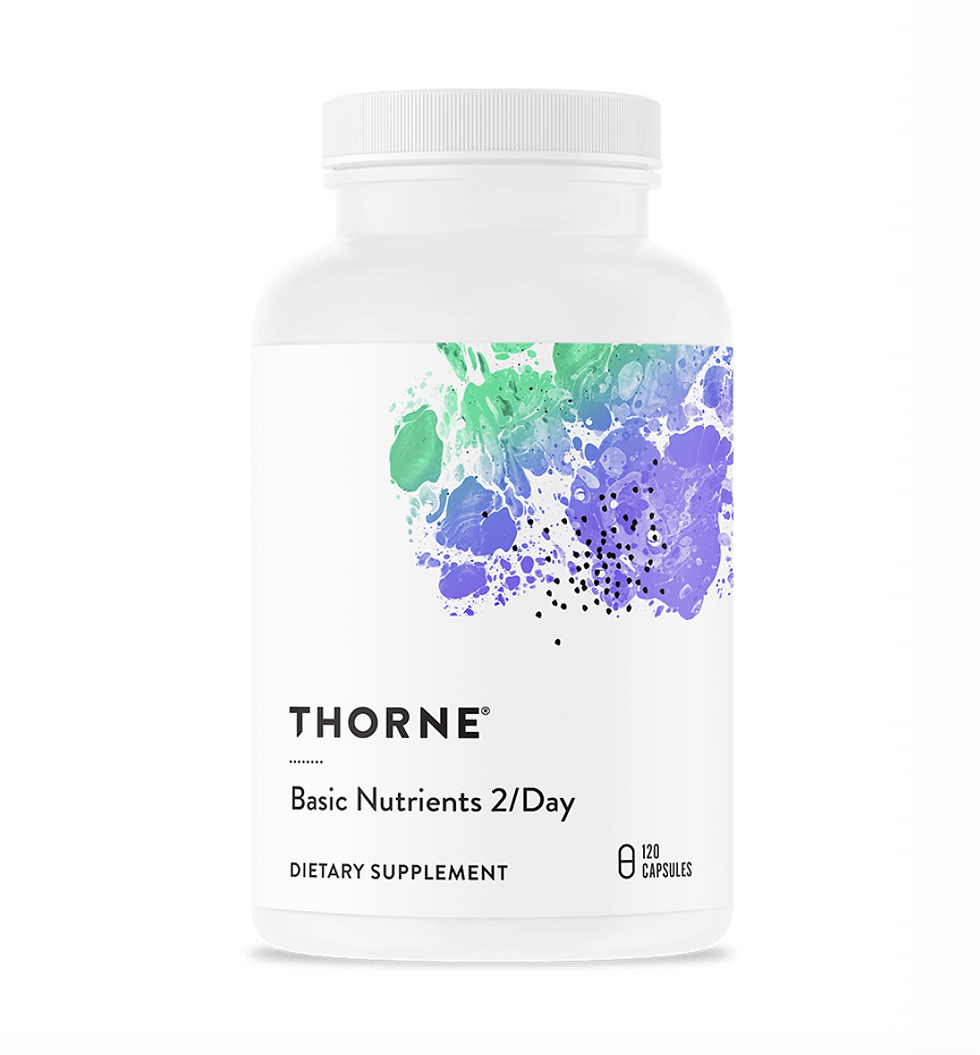
This matters beyond energy and immunity. Some of the weight lost on GLP-1 medications comes not from fat, but from lean muscle mass, with some estimates suggesting 30 to 40% of total weight lost may be fat-free mass. Researchers point partly to low protein and calcium intake as contributing factors. That is not a reason to avoid these medications. It is a reason to be intentional about what you are eating while you are on them.
Just because you are not hungry does not mean your body no longer requires protein, vitamins, minerals, and enough total calories to support muscle tissue, metabolic function, and overall health. Eating too little on a GLP-1 can deepen fatigue, accelerate muscle loss, and work against the very outcomes you are trying to create.
This is exactly the kind of gap where functional nutrition support matters, where I ask not just what you are eating, but whether your body is getting what it actually needs to function well, not just to survive.
What to Do Instead
If any of this is resonating, I do not want you to walk away feeling like you have been doing everything wrong. I want you to walk away with a different lens.
Shift the focus from restriction to nourishment:
Prioritize protein at every meal to protect lean muscle and support recovery
Eat consistently so your body receives a clear signal that fuel is available and it is safe to function at full capacity
Recover intentionally after exercise because what you eat around your workouts matters as much as the workout itself
Hydrate well because dehydration compounds every symptom of under-fueling
Strength train because building and maintaining muscle requires both the stimulus and the fuel to support it
Ask "am I nourishing?" before "am I restricting?" and let that question drive your choices
What I have found in my practice is that when women start eating enough, consistently and strategically with real attention to what their body actually needs, things begin to shift.
Energy comes back.
Recovery improves.
Muscle responds.
The body stops conserving and starts cooperating.
Sometimes the next step is not eating less. It is fueling better.
If you are wondering whether under-fueling might be part of your picture, I would love to help you figure it out. This is exactly the kind of root-cause work we do together. Book your free 15 minute consult here.


Comments